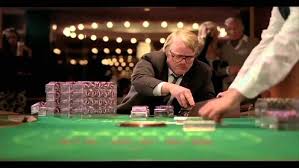
There is something quietly similar between a stage performance and a casino floor. At first, they may seem like entirely different worlds, yet both are built on unfolding moments filled with anticipation, uncertainty, and emotional movement that cannot be fully predicted. When a person steps into a casino environment, it often feels less like a simple activity and more like entering a live performance, where each action carries weight, and every outcome becomes part of a larger unfolding story.
Behavioral research supports this parallel. Studies in entertainment psychology suggest that uncertain, real-time experiences increase emotional engagement by up to 70% compared to predictable ones. This is why both theatre and risk-based environments feel so immersive. They are not just about what happens, but about not knowing what will happen next.
The Stage of Uncertainty and Anticipation
Every performance begins with anticipation. The curtain rises, the audience leans forward, and a quiet tension fills the space. In a casino, that same anticipation exists in every moment before an outcome is revealed, whether it is a spin, a card, or a number.
Neuroscience explains this through the anticipation-reward cycle, where the brain releases dopamine not just when a reward occurs, but before it happens. In fact, some studies suggest that anticipation can create stronger emotional responses than the reward itself.
A common observation from players reflects this clearly:
“The waiting is sometimes more intense than the result. That’s where the feeling really builds.”
This shared emotional space—between what is known and what is possible—is where both performance and risk begin to feel meaningful.
The Emotional Flow Between Risk and Reward
In any performance, there is a rhythm between tension and release. A quiet buildup leads to a moment of resolution, and then the cycle begins again. This same rhythm exists between risk and reward.
- Risk creates tension, holding attention in place
- Reward releases that tension, even if briefly
Research in behavioral economics shows that variable rewards (unpredictable outcomes) are among the most engaging forms of reinforcement, keeping people involved longer than fixed or predictable systems.
A widely shared quote in performance theory captures this idea:
“What keeps an audience engaged is not certainty, but the promise of possibility.”
In real-world discussions, players often express this emotional rhythm in simple terms:
“You keep going because it feels like something could happen at any moment.”
This emotional flow is what gives both performance and risk their energy.
The Role of the Player as Performer
In this environment, the player is not just observing—they are participating. Much like a performer, their actions shape the unfolding moment, even if the outcome itself is uncertain.
Psychologists refer to this as perceived control, the feeling that one’s actions influence results. Studies show that when people feel involved in a process, their emotional engagement increases significantly, even if outcomes remain random.
For example, a 2022 study found that participants who made active choices felt over 50% more connected to the experience than those who observed passively.
This explains why many players describe the experience as personal:
“It doesn’t feel like watching—it feels like you’re part of it.”
The player becomes both audience and performer, moving through the experience while also shaping how it feels.
The Illusion of Control Within the Act
Every performance gives the impression of control. The performer appears to guide the moment, even when unpredictability exists beneath the surface. In risk-based environments, this same feeling appears as the illusion of control.
This does not mean people are unaware of chance. Instead, the act of choosing—pressing a button, making a decision—creates a natural sense of involvement.
Research in cognitive psychology shows that:
- People often overestimate their influence in uncertain systems
- Active participation increases confidence, even without actual control
A player once shared this perspective:
“I know it’s random, but it still feels like my decisions matter.”
This feeling is not accidental. It is part of what makes the experience engaging, giving structure and meaning to each moment.
The Final Curtain and Quiet Reflection
Every performance ends. The lights dim, the energy settles, and what remains is reflection. In the same way, every session reaches a point where the intensity fades and the mind steps back.
This phase is known as post-experience processing, where the brain organizes what just happened. Emotional intensity decreases, and clarity begins to return.
Studies show that during this stage:
- People are more likely to evaluate their decisions
- Emotional responses become more balanced
- Memory of the experience becomes more structured
A player described this shift simply:
“After it’s over, everything feels clearer. You see it differently than when you were in it.”
This quiet moment is where experience turns into understanding.
What This Parallel Reveals
The connection between stage performance and risk is not just metaphorical—it reflects how humans naturally respond to uncertainty. Across both environments, the same patterns appear:
- Anticipation draws attention
- Action creates involvement
- Uncertainty builds tension
- Outcome brings release
- Reflection creates meaning
A global study on entertainment behavior found that over 65% of people prefer experiences that involve uncertainty and emotional buildup, rather than predictable outcomes. This suggests that unpredictability is not something we avoid—it is something we seek.
A Soft Closing Thought
A stage performance that mirrors risk and reward shows us that these experiences are deeply human. They are not only about outcomes, but about the journey between them—the waiting, the choosing, the feeling of possibility.
And perhaps the most meaningful truth is this: what stays with us is not just what happened, but how it felt while it was happening. The tension, the release, the quiet moments in between all become part of a larger story.
When we begin to see this, we understand that we are not just participants in these moments, but observers of our own responses within them. And in that awareness, there is a calm and steady clarity that remains, long after the performance has ended.
Leave a Reply