
There is a quiet kind of waiting that unfolds inside a casino, one that feels less like passing time and more like standing on a stage where something is always about to happen. A person may sit still, watching a screen or a table, yet internally, there is motion, expectation, and emotion. This waiting is not empty. It is active, layered, and deeply human.
Modern behavioral research shows that anticipation itself can be as powerful as outcomes. In fact, studies suggest that dopamine levels can rise by up to 80% during anticipation of a reward, sometimes even more than during the reward itself. This explains why waiting in such environments feels so intense, almost like a performance where the moment before the result carries as much weight as the result itself.
In this sense, the casino becomes a stage, and the player becomes both performer and audience, moving through a sequence of emotional cues shaped by uncertainty, hope, and time.
The Stage of Stillness and Anticipation
Every performance begins with stillness. In theater, it is the silence before the first line. In a casino, it is the pause before the spin stops or the card is revealed.
This stillness is not empty. It is charged.
Psychologists often refer to this as “anticipatory tension”, where the brain becomes highly alert to possible outcomes. During this phase:
- Heart rate can slightly increase
- Focus narrows
- Time feels slower than usual
A player described this moment online:
“It’s strange… nothing is happening, but it feels like everything is about to happen.”
This is what gives waiting its depth. The present moment stretches, and the mind leans forward into the future, creating a bridge between what is and what might be.
The Emotional Performance of Hope
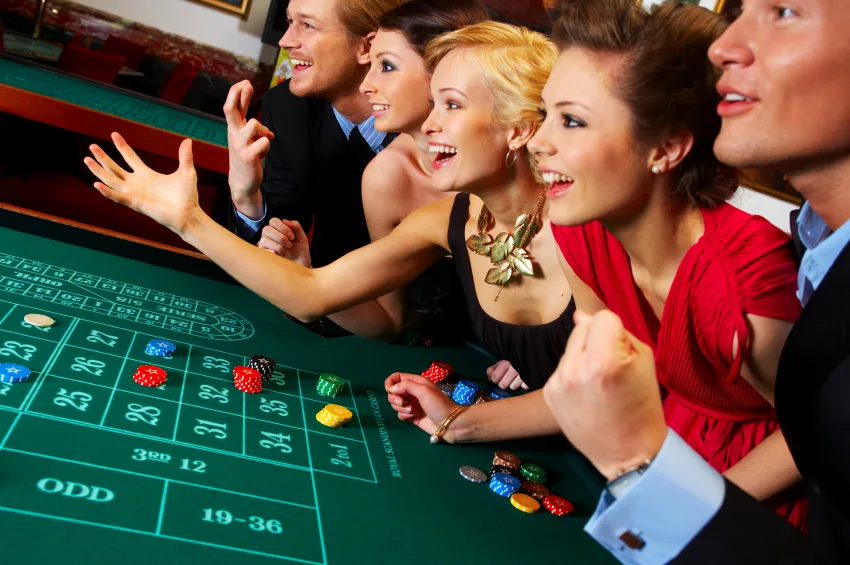
Hope quietly becomes the central emotion during waiting. It does not need to be loud or certain. It simply stays present.
Research in decision psychology shows that people tend to overestimate positive outcomes in uncertain situations, especially when rewards are involved. This is sometimes referred to as optimism bias, and it plays a strong role in gambling environments.
This creates an emotional rhythm:
- A rise of confidence (“this might be the one”)
- A soft return to doubt
- Then hope again
A regular player once shared:
“Even after losses, there’s always that feeling… maybe the next one changes everything.”
This cycle turns waiting into a performance of emotion. The player experiences shifting roles—hopeful, cautious, curious—without ever leaving their seat.
The Body as Part of the Performance
Even in stillness, the body speaks.
Studies on nonverbal behavior suggest that over 60% of emotional expression can be observed through body language, often without conscious awareness. In moments of waiting, this becomes especially visible.
Common physical signals include:
- Leaning forward during anticipation
- Subtle tightening of fingers
- Holding breath briefly before outcomes
These movements are small, yet meaningful. They show that waiting is not passive—it is embodied.
One observer noted:
“You can tell what someone is feeling just by how they sit during the spin.”
The body becomes part of the performance, expressing tension and expectation without words.
The Illusion of Progress Within Waiting
One of the most powerful psychological effects in this experience is the illusion of movement. Even when nothing is happening, it feels like something is progressing.
This is linked to what researchers call the “near-miss effect” and “perceived progression bias.” Players often feel that:
- Time spent increases the chance of a win
- Outcomes are “building up” to something
In reality, most casino systems operate on independent probabilities, meaning each outcome is separate. Yet perception tells a different story.
A widely shared comment captures this well:
“It feels like the game owes you something after a while… even though you know it doesn’t.”
This illusion transforms waiting into a narrative. The player feels part of a story moving forward, even when the system itself remains unchanged.
The Slot Machine Waiting Cycle
Consider a simple scenario:
- Player initiates spin
- Reels slow down → anticipation builds
- Symbols align (or don’t) → outcome revealed
- Immediate option to spin again
This entire cycle often takes less than 5 seconds, yet within it:
- Tension rises
- Hope peaks
- Release follows
Because the cycle repeats quickly, the waiting becomes continuous, creating the feeling of an ongoing performance rather than isolated moments.
What Real Players Say
Across forums and discussions, similar patterns appear:
“The waiting is the most addictive part, honestly.”
“You don’t realize how focused you are until something breaks the moment.”
“It’s like you’re watching something unfold, even though you’re the one pressing the button.”
These reflections highlight how deeply the experience is felt—not just as action, but as anticipation.
The Gentle Return to Reality
Eventually, the waiting ends. The result appears, or attention shifts, and the emotional intensity softens.
This transition often brings:
- A release of physical tension
- A return to normal breathing
- A clearer sense of awareness
Neuroscience suggests that after anticipation resolves, the brain briefly resets, allowing for reflection. This is why moments after outcomes often feel calmer and more grounded.
As one player put it:
“Once it’s over, you kind of step back and see it differently.”
This is the closing of the performance—the quiet lowering of the curtain.
A Soft Closing Thought
The feeling of waiting for luck is not just a pause between actions. It is an experience in itself, shaped by psychology, emotion, and design. It carries rhythm, tension, and meaning, much like a performance unfolding in slow motion.
What seems like stillness is actually movement—of thought, feeling, and expectation.
And perhaps the most important insight is this: when we begin to notice the nature of this waiting, we step slightly outside of it. We are no longer only part of the performance, but also aware of it. In that awareness, there is a quiet balance, where anticipation can be felt without taking over, and where even the stillest moments carry clarity as well as emotion.
Leave a Reply